The global demand for durable, rapid-deployment building envelopes has shifted the focus toward advanced profiling techniques in steel construction. For project managers and procurement officers, identifying a reliable corrugated metal siding manufacturer is no longer just about finding a supplier, but about sourcing a partner capable of balancing structural rigidity with weather-resistant longevity.
The complexity of modern architectural requirements—ranging from extreme thermal fluctuations to high-wind loads—demands a precise approach to metal profiling. When the siding fails, the entire structural integrity of a warehouse or hangar is compromised, leading to increased maintenance costs and potential operational downtime.
This analysis explores the technical selection criteria for high-performance metal siding and how integrated prefabricated solutions, such as those found at corrugated metal siding manufacturer, are optimizing the lifecycle of industrial steel buildings.


Corrugation is not merely an aesthetic choice but a fundamental engineering strategy to increase the moment of inertia of a thin metal sheet. By introducing rhythmic folds, a corrugated metal siding manufacturer transforms a flexible plane into a rigid structural component capable of spanning significant distances between supports without buckling.
The depth and pitch of the ribs directly correlate to the load-bearing capacity. In large-scale projects like aircraft hangars or industrial workshops, these profiles must be calculated to withstand both positive wind pressure and negative suction, ensuring the building skin remains secure under extreme atmospheric conditions.
Selecting the correct gauge and alloy is the first step in ensuring the longevity of a steel structure. Most industrial siding utilizes galvanized steel or Galvalume, which combines aluminum and zinc to provide a superior corrosion barrier compared to traditional galvanization. The thickness of the steel, often measured in gauge, determines the impact resistance of the wall.
Beyond material thickness, the profile geometry—such as trapezoidal or sinusoidal shapes—affects how water sheds and how the panels interlock. Precision-engineered interlocking seams are critical; any gap in the lap joint can lead to capillary action, drawing moisture into the building envelope and causing internal oxidation.
Engineering requirements also extend to the fastening system. Over-tightening fasteners can deform the profile, while under-tightening leads to leaks. A professional manufacturer provides specific torque requirements and washer specifications to ensure a weather-tight seal without compromising the material's integrity.
Steel is naturally conductive, making thermal bridging a significant challenge for large industrial buildings. Without proper mitigation, condensation forms on the interior surface of the metal siding, which can lead to mold growth and the degradation of stored assets or machinery.
Furthermore, the use of ridge vents and specialized canopies helps regulate airflow. By allowing hot air to escape from the apex of the building, the pressure differential is reduced, and the cooling load on HVAC systems is minimized, enhancing the overall energy efficiency of the facility.
The durability of metal siding is evaluated based on its resistance to environmental stressors. Factors such as salt-spray exposure in coastal regions or UV radiation in arid climates dictate the necessary coating specifications. A high-quality corrugated metal siding manufacturer will offer varying coating weights to match the specific geographic risk profile of the project.
When comparing different configuration profiles, the balance between weight, stiffness, and cost becomes apparent. While heavier gauges offer maximum protection, optimized profiling allows for a reduction in material volume without sacrificing the structural capacity required for standard industrial use.
The versatility of corrugated steel allows for wide application across various sectors. In aviation, aircraft hangars require immense clear spans and oversized door systems—such as bi-fold or hydraulic doors—which place unique stresses on the surrounding siding. The siding must remain rigid even when large sections of the wall are opened to the elements.
For agricultural and livestock buildings, the focus shifts to corrosion resistance against ammonia and moisture. In these scenarios, a corrugated metal siding manufacturer often recommends thicker coatings or specialized finishes to prevent premature rusting in high-humidity, biologically active environments.
The industry is moving toward "smart coatings" that offer self-healing properties or photocatalytic capabilities to reduce urban pollution. These advanced polymers are being integrated into the production line of the corrugated metal siding manufacturer to extend the maintenance cycle from 10 years to 25 years.
Additionally, there is a growing trend toward the integration of Building Integrated Photovoltaics (BIPV). By embedding solar cells directly into the metal profiling, the building envelope evolves from a passive protective shell into an active energy-generating asset, significantly reducing the carbon footprint of industrial operations.
Automation in fabrication is also reducing material waste. Computer-produced drawings and CNC precision cutting ensure that panels are manufactured to exact lengths, minimizing on-site trimming and reducing the risk of exposed edges that are susceptible to edge-creep corrosion.
When evaluating a provider, procurement teams should look beyond the unit price per square foot. The true cost of ownership includes the speed of installation, the accuracy of the technical drawings, and the long-term durability of the coating. A missing detail in the foundation drawings can lead to costly delays during the erection phase.
A comprehensive evaluation should analyze the manufacturer's ability to provide integrated services—from initial design to the provision of detailed erection support. This reduces the friction between the fabrication stage and the final onsite assembly.
The following matrix provides a framework for comparing different configuration profiles based on typical industrial requirements.
| Configuration Profile | Load Capacity | Corrosion Resistance | Recommended Use Case |
|---|---|---|---|
| Basic Utility | Low-Medium | Standard Galv | Small Storage Sheds |
| Standard Commercial | Medium | Galvalume | Retail/Office Outbuildings |
| Industrial Heavy-Duty | High | High-Zinc Alloy | Steel Workshops/Factories |
| Aviation Spec | Very High | Advanced Polymer | Aircraft Hangars |
| Agricultural Grade | Medium | Acid-Resistant | Livestock/Poultry Farms |
| Extreme Environment | Maximum | Marine Grade | Coastal Industrial Sites |
Galvanized steel is coated primarily with zinc, providing a strong sacrificial layer against rust. Galvalume is a coating consisting of aluminum and zinc. The aluminum provides superior protection against atmospheric corrosion and heat reflection, while the zinc ensures edge protection. For most industrial buildings, Galvalume is preferred due to its longer lifespan in diverse climates.
The corrugation process increases the section modulus of the steel sheet. By bending the metal into a series of peaks and valleys, the material's resistance to bending (stiffness) is significantly increased along the axis of the ribs. This allows the siding to act as a structural diaphragm, contributing to the overall stability of the building envelope.
Yes, provided the gauge is increased and the fastening frequency is adjusted. High-wind zones require a corrugated metal siding manufacturer to calculate the maximum wind load and specify a tighter fastening pattern to prevent the panels from lifting or shearing during storm events. Heavy-duty interlocking profiles are typically recommended for these regions.
Condensation is managed through the use of vapor barriers and insulation. By installing a thermal break between the interior and exterior skins, the interior surface of the metal remains above the dew point. Additionally, incorporating ridge vents and gable vents ensures adequate airflow, which carries away excess moisture before it can condense.
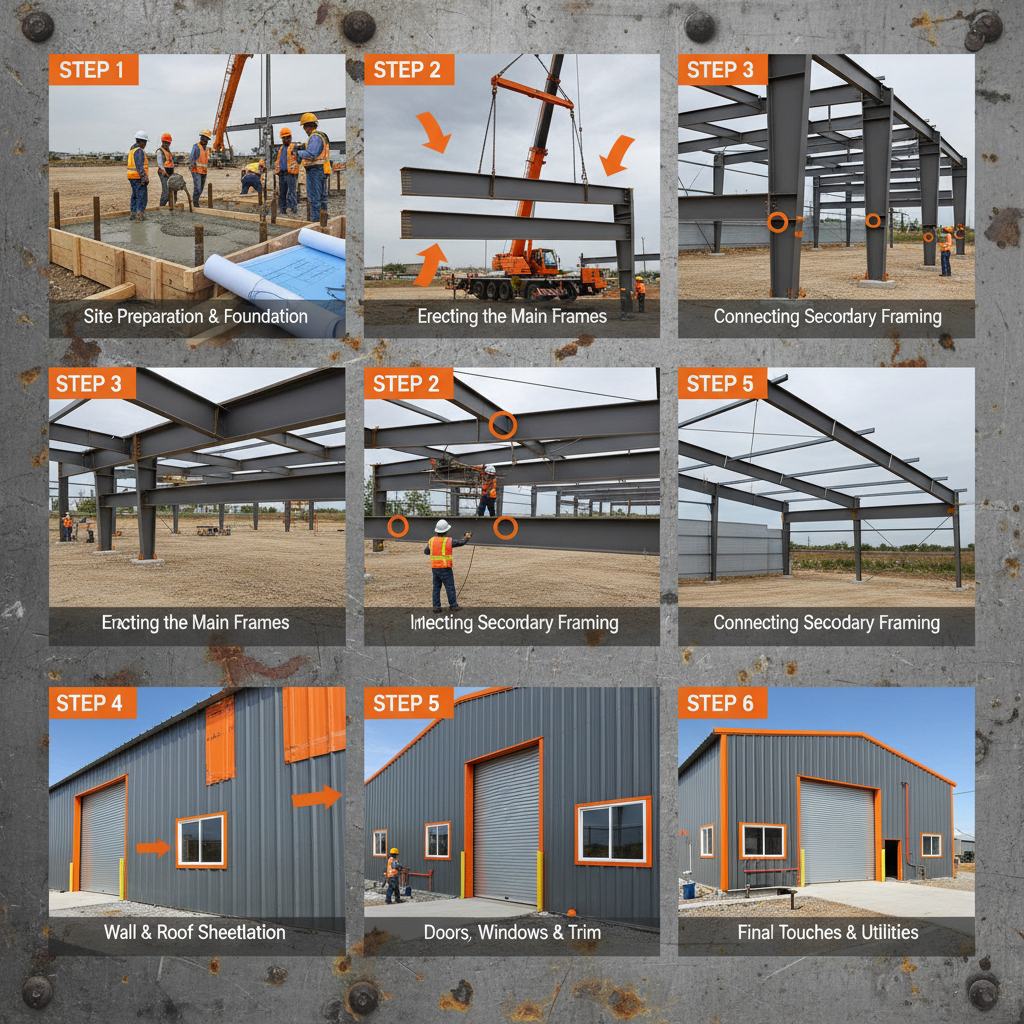
Installation begins with a precision-engineered foundation based on computer-produced drawings. Siding is then attached to the steel frame using specialized fasteners. Because hangars often have tall eaves and large openings, structural stability is maintained through rigid framing and precise alignment of the siding panels to ensure the interlocking seams are perfectly seated.
Gauge selection depends on the building's height, environmental exposure, and intended use. For light storage, 26 or 29 gauge may suffice. For heavy industrial use or aviation hangars, 22 or 24 gauge is often required to provide the necessary impact resistance and structural rigidity. Always consult the technical documentation from your manufacturer for a load-bearing analysis.
The transition toward prefabricated, high-performance steel envelopes underscores the importance of precision in material selection and profiling. By prioritizing the relationship between rib geometry, coating chemistry, and thermal mitigation, operators can significantly reduce the lifecycle costs of their industrial facilities.
For those seeking a balance of durability and customizable flexibility—particularly for specialized assets like aircraft housing—partnering with a focused corrugated metal siding manufacturer ensures that the building skin is an asset rather than a maintenance liability.