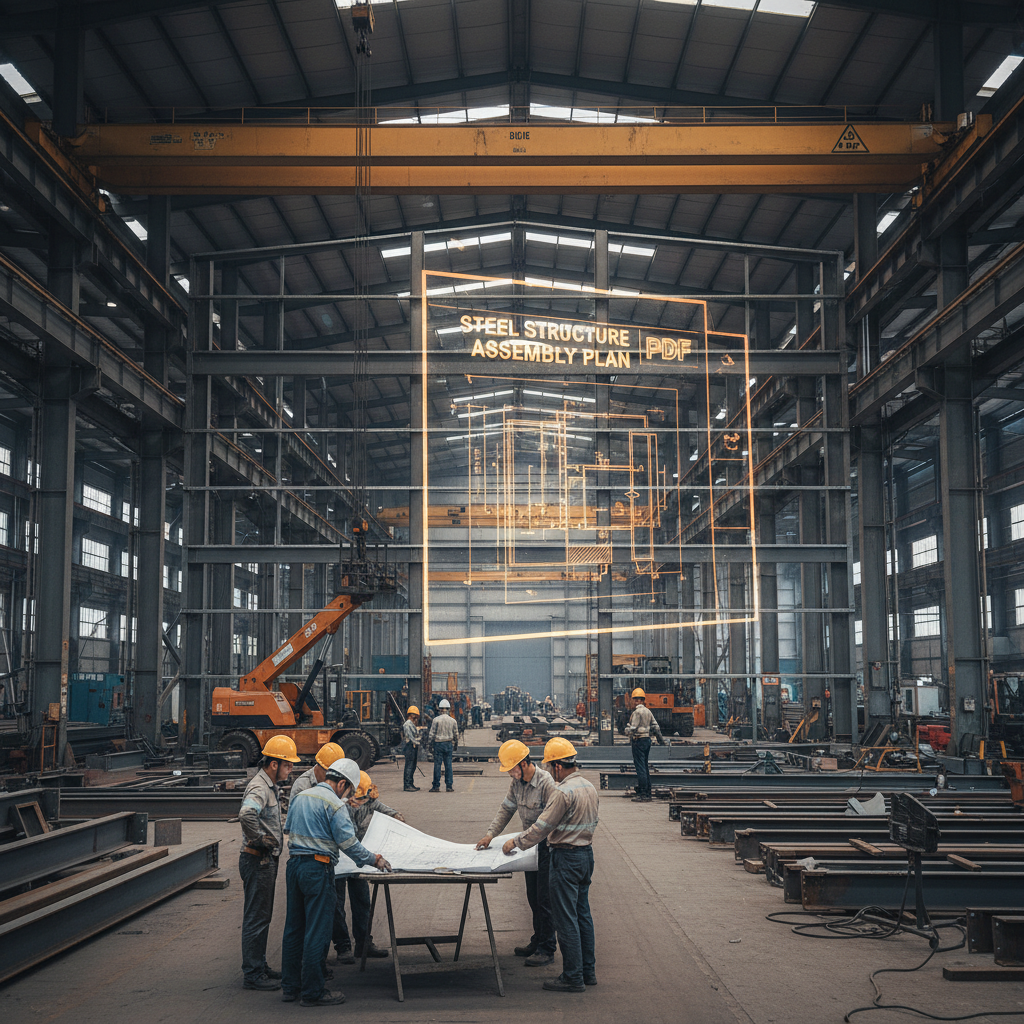
You know, after running around construction sites all year, dealing with dust and engineers, you start to notice patterns. Industrial building contractors, especially the prefab stuff, is everywhere now. It’s not just about speed anymore; it’s about controlling costs, dealing with labor shortages, and honestly, just getting projects done. To be honest, it feels like we're finally moving beyond just talking about efficiency and actually doing something about it.
But it's not all sunshine and roses, believe me. I've seen so many designs that look great on paper but fall apart the moment a real worker tries to assemble them. It’s the little things, you know? Like, thinking you can get away with thinner steel than you should, or assuming everyone will have a perfectly level foundation. Have you noticed that? It’s always the foundation.
And the materials… don't even get me started. We're using a lot more lightweight concrete these days, the kind with the expanded clay. Feels…different. Not as solid as the old stuff, a little crumbly. Smells vaguely of burnt sugar when you cut it, strangely enough. But it’s lighter, easier to handle, and that matters when you're trying to lift sections into place. Then there’s the corrugated steel, obviously, but even that varies. Some batches are coated with a really slick finish that makes it hard to weld, others are… well, let's just say they rust if you look at them funny.
What’s Trending & Design Pitfalls
Right now, everyone’s obsessed with modular designs. It’s all about repeating elements, standardized sizes, minimizing waste. Makes sense, on paper. But I encountered this at a factory in Tianjin last time – they were trying to use the same window frame for two different wall thicknesses. A nightmare! The insulation just didn’t fit, and the whole thing looked…off. It's a fine line between standardization and forcing things to fit that shouldn’t.
Another trend is incorporating more smart building tech into the prefab modules. Sensors, automated controls, the whole shebang. Which is great, in theory. But then you've got to worry about wiring, power supplies, and keeping everything protected during transport and assembly. It adds a whole layer of complexity.
Material Deep Dive: Concrete, Steel & More
Like I said, lightweight concrete is huge. But it's not a silver bullet. It’s less dense, so you need a larger volume to get the same structural strength. That impacts foundation requirements, transportation costs…the whole equation changes. We're also seeing a lot more use of composite materials – fiber-reinforced polymers, that kind of thing. They're strong, lightweight, and corrosion-resistant, but they're also expensive, and not every crew knows how to work with them properly. There’s a learning curve.
Steel, of course, is still king. But the price fluctuates wildly, which makes planning a nightmare. And the quality… you really have to inspect every batch. You can get steel that’s been improperly rolled, or that has internal flaws. It might look okay, but it’ll fail under stress. You learn to trust your gut, and the guys who’ve been working with steel for decades. They can spot a bad batch a mile away.
And then there’s the insulation. Spray foam is popular, but it’s messy, and you need proper ventilation during installation. Mineral wool is another option, but it can be irritating to work with. It’s always a trade-off between performance, cost, and worker comfort.
Testing Real-World Durability
Lab tests are fine, I guess, but they don’t tell the whole story. I’m talking about simulating actual on-site conditions. We’ve started doing more accelerated weathering tests – exposing modules to intense UV radiation, extreme temperatures, and repeated cycles of wetting and drying. It’s brutal, but it gives you a better idea of how the materials will hold up over time.
We also do impact tests. Basically, we drop weights onto the modules to see how they respond to stress. Sounds simple, but it reveals a lot about the structural integrity. And we’ve started incorporating more non-destructive testing methods, like ultrasonic scanning, to detect hidden flaws without having to tear things apart.
But honestly? The best test is just time. Building something, leaving it standing for a few years, and seeing what happens. It's slow, but it’s the most reliable way to assess long-term durability.
How Users Actually Utilize These Systems
This is where things get interesting. What engineers think will happen and what actually happens are often two different things. I've seen crews try to modify modules on-site, thinking they can just tweak a few things to make them fit their needs. Usually, it ends badly. You have to emphasize the importance of sticking to the original design.
And maintenance is a huge issue. These systems are designed to be durable, but they’re not maintenance-free. You need to regularly inspect the seals, check the connections, and address any signs of corrosion. But often, that doesn’t happen. People just assume it’ll all take care of itself.
Advantages, Disadvantages & Customization Options
Look, the advantages are obvious: speed, cost control, quality control. You’re building in a controlled environment, so you minimize waste and reduce the risk of errors. But the disadvantages are real too. Transportation costs can be significant, and you need a skilled crew to assemble everything properly. And there's the issue of rigidity. These systems aren't always ideal for complex designs.
Prefab Building Contractor System Performance
A Customer Story: Shenzhen & the Dilemma
Last month, that small boss in Shenzhen who makes smart home devices insisted on changing the interface to for all the power connections in the prefab office modules. He said it was "future-proof." Anyway, I think he just wanted to look trendy. The result? The local electricians couldn't find compatible connectors quickly enough, and the project was delayed by two weeks. He learned a valuable lesson about sticking to standard components. Later… forget it, I won't mention it.
Core Considerations & On-Site Realities
Customization is possible, of course. We had one client who wanted to incorporate a green roof into their prefab building. It wasn’t easy – you have to account for the extra weight, the drainage requirements, and the structural support. But we made it work. It just adds to the cost and complexity.
The biggest challenge, though, is still coordination. You’ve got the designers, the engineers, the fabricators, the transportation company, and the on-site crew. Everyone needs to be on the same page. Clear communication and detailed planning are essential.
Ultimately, whether this thing works or not, the worker will know the moment he tightens the screw. He’ll feel if it’s solid, if it fits properly, if it’s going to last. That's the real test.
Key Considerations for Successful Industrial Building Contractor Implementation
| Design Compatibility |
Material Selection |
On-Site Logistics |
Long-Term Maintenance |
| Ensure seamless integration with existing infrastructure. |
Prioritize durable and weather-resistant materials. |
Optimize delivery schedules and staging areas. |
Establish a proactive inspection and repair plan. |
| Avoid overly complex designs that increase fabrication time. |
Consider lifecycle costs when choosing materials. |
Train on-site personnel on proper assembly techniques. |
Budget for potential component replacements. |
| Validate designs with experienced construction professionals. |
Verify material certifications and quality control reports. |
Secure necessary permits and approvals. |
Document all maintenance activities for future reference. |
| Focus on standardized components for ease of assembly. |
Select materials with minimal environmental impact. |
Implement a robust quality assurance program. |
Utilize remote monitoring systems for early problem detection. |
| Address potential thermal bridging and condensation issues. |
Ensure materials comply with local building codes. |
Coordinate with utility providers for timely connections. |
Establish a clear chain of responsibility for maintenance tasks. |
| Account for future expansion or modification needs. |
Investigate innovative and sustainable material alternatives. |
Minimize disruption to surrounding operations during construction. |
Regularly update maintenance procedures based on performance data. |
FAQS
The cost is heavily influenced by material selection, the complexity of the design, transportation distances, site preparation, and labor costs for assembly. More complex designs require more skilled labor and custom fabrication, driving up the price. Location significantly affects transportation costs, and site preparation can add substantial expenses if the ground isn’t level or requires remediation. I’ve seen costs swing wildly depending on these factors.
Prefab construction typically reduces the overall timeline by 30-50%. While traditional builds involve on-site work vulnerable to weather delays and labor shortages, prefab buildings are largely constructed in a controlled factory environment, speeding up the process. Site work (foundation, utilities) can run concurrently with prefab fabrication, further compressing the schedule. However, remember that accurate design and planning are crucial for maximizing these time savings.
Prefabrication facilities usually have rigorous quality control procedures, including material inspections, welding certifications, and dimensional checks. These measures minimize errors and ensure consistency. The controlled factory environment allows for easier inspection and correction of defects compared to on-site construction. Inspections happen at various stages: incoming materials, during fabrication, and prior to shipment. Good facilities will also have documented quality assurance protocols.
Yes, but with limitations. Standardization is key to cost-effectiveness in prefab construction, so extensive customization can negate those benefits. However, most manufacturers offer options for varying dimensions, layouts, finishes, and incorporated features. We recently had a client who wanted custom ventilation systems integrated into their modules, which required significant engineering and fabrication adjustments, adding to the cost and lead time. It’s about finding the right balance between customization and standardization.
Prefab construction generates less waste compared to traditional methods, as materials are precisely cut and optimized in the factory. It also reduces site disturbance and emissions from construction equipment. Prefabricated components can be manufactured using sustainable materials and energy-efficient techniques. Transportation, however, can offset some of these benefits depending on the distance. We’re always looking for ways to minimize the carbon footprint throughout the entire process.
Foundation requirements depend on soil conditions, building weight, and local building codes. Typically, a concrete slab-on-grade foundation is sufficient for lighter prefabricated structures. However, more complex designs or challenging soil conditions may require deeper foundations, such as piers or piles. Proper soil testing and engineering analysis are essential to ensure the foundation can adequately support the structure. Seriously, don’t skimp on the foundation.
Conclusion
So, what have we learned? Industrial building contractors, especially in the prefab space, are changing the game. They offer speed, cost control, and quality, but they’re not a magic bullet. You need careful planning, attention to detail, and a healthy dose of realism. It’s about understanding the trade-offs and choosing the right approach for your specific project.
Looking ahead, I think we’ll see even more innovation in materials and design. More automation, more sustainable practices, and a greater focus on customization. But ultimately, whether this thing works or not, the worker will know the moment he tightens the screw.