Steel Frame Office Building – Durable & Flexible Industrial Solutions
Jan . 03, 2026 06:55 Back to list
Steel Frame Office Building: Durable Backbone of Modern Industrial Spaces
Having spent quite a few years in the industrial equipment sector, I've come to appreciate just how critical a steel frame office building can be for companies that need sturdy, functional, and adaptable workspace. Oddly enough, while architectural glass and fancy facades get much of the spotlight, it’s the steel skeleton behind the scenes that holds it all together — and frankly, that’s where the real industrial magic happens.
The trend these days leans heavily on steel frameworks because they marry strength with flexibility in a way that older materials simply can’t match. You’ll find these buildings anchored in plants, warehouses, and even high-rise commercial developments. What’s fascinating is that the steel frame doesn’t just support heavy machinery or multiple floors; it also offers resistance to environmental challenges like high winds or seismic activity. Engineers I’ve chatted with often mention that choosing steel frames isn’t merely about structural integrity but also about long-term value and ease of modification.
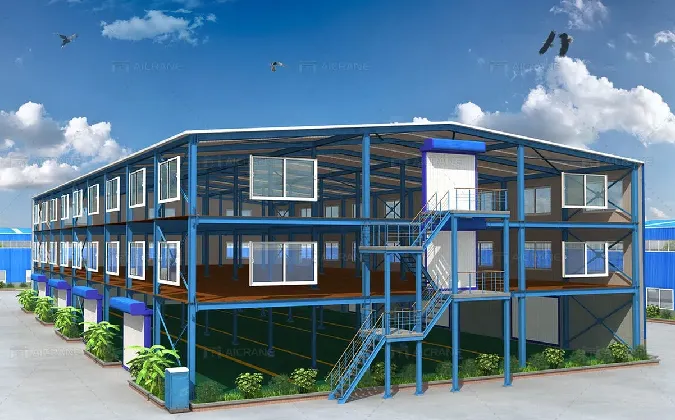
Speaking of design, steel frames are a bit like a Lego set for grown-ups — they allow for speedy assembly without sacrificing precision. Components are typically prefabricated and treated for corrosion resistance, which means the construction timeline shrinks drastically. I recall a project where the owner was pleasantly surprised to have their office space ready weeks ahead of schedule. Steel’s modular nature means you can expand or retrofit offices without major headaches, which is kind of a godsend when business needs change unexpectedly.
| Parameter | Details |
|---|---|
| Steel Grade | Q235B or Q345B (Common structural grades) |
| Surface Treatment | Hot-dip galvanized or powder coated |
| Typical Building Height | Up to 3–5 stories (can be customized) |
| Load Bearing Capacity | Usually 200-500 kg/m² depending on design |
| Fire Resistance | Treated with fireproof coatings for enhanced safety |
| Construction Time | Generally 2–4 months depending on size |
One of the advantages I especially value is how these buildings sustain modifications with minimal disruption. Say your business decides to add a mezzanine or needs extra office space — steel frames can adapt without wrecking the whole structure. Plus, the maintenance is relatively straightforward, especially when compared to concrete or wood.
That said, quality varies among vendors. I’ve encountered differences in steel quality, fabrication precision, and on-site support. To help you sort it out, here’s a quick vendor comparison that could save time:
| Vendor | Material Quality | Custom Design | Lead Time | After-Sales Support |
|---|---|---|---|---|
| Hong Ji Shun Da | High-grade Q235B steel, thoroughly galvanized | Full customization available | Typically 60–90 days | Comprehensive and responsive |
| Vendor B | Moderate quality steel, powder coating only | Limited customization | 90–120 days | Basic warranty support |
| Vendor C | Steel grade varies, inconsistent finishes | Standard designs only | 120+ days | Limited post-sale engagement |
The last thing worth mentioning: testing. In real terms, steel frame office buildings undergo rigorous quality checks, from weld integrity to load simulations. Many engineers I’ve worked with insist on third-party inspections — a wise move considering site safety and longevity. When you visit a manufacturer like that at Hong Ji Shun Da, you often notice how seriously they take these tests, which reassures customers like me that their investment is solid.
There’s a little story I like to share — a client needed a two-story steel-framed office adjacent to a heavy machinery plant. The challenge? Tight space and a demanding schedule. Choosing a steel frame was a game-changer. The project wrapped up early, the client was ecstatic, and they’re still using that building seamlessly after five years with only minor updates.
All in all, steel frame office buildings may not excite everyone with their aesthetics at first glance, but for pragmatic folks in industrial settings, they’re indispensable. Their blend of durability, adaptability, and cost-effectiveness make them my go-to recommendation whenever someone asks.
In the end, steel isn’t just metal — it’s the quiet backbone of modern workspace evolution.
References:
- International Building Code (IBC), Steel Construction Provisions 2021.
- American Institute of Steel Construction (AISC) Specification for Structural Steel Buildings.
- Hong Ji Shun Da official products & technical data (hongjishunda.com).
-
Complete Guide to Metal Garage with Apartment Cost and Budgeting
NewsApr.16,2026
-
Understanding Metal Garage Cost and Complete Investment Guide
NewsApr.09,2026
-
Understanding the Cost to Build a Metal Garage for Your Property
NewsApr.07,2026
-
Understanding the Cost of Metal Garage Building and Factors to Consider
NewsApr.04,2026
-
Understanding the Cost of a 20x30 Metal Garage and Key Considerations
NewsMar.31,2026
-
Understanding the Cost for Metal Garage Construction and Installation
NewsMar.28,2026
Products categories
Our Latest News
We have a professional design team and an excellent production and construction team.